Why are companies such as LIC, Adani Power, NSE, DMart, and Hindustan Aeronautics not included in the NIFTY50 index despite their large market capitalizations? The answer lies in the specific rules and criteria used by the NIFTY50 index to select its constituents, focusing on free-float market capitalization and trading requirements rather than total market cap alone.
- The NIFTY50 selects companies based on average free-float market capitalization from the NIFTY100 index.
- Free float refers to shares available for public trading, excluding promoter and strategic holdings.
- Companies must trade on the NSE and be part of its futures and options (F&O) segment to qualify.
- The index reviews constituents twice a year using six-month average data and applies a 1.5 times free-float market cap threshold for new entrants.
- Stocks listed only on other exchanges, like NSE shares listed on BSE, cannot join the NIFTY50.
What is the NIFTY50 index and how does it select companies?
The NIFTY50 is a major benchmark index in India that tracks the performance of the 50 largest and most liquid companies listed on the National Stock Exchange (NSE). It serves as a yardstick for investors to measure returns and is widely followed by passive funds and ETFs.
The index selects its constituents from the NIFTY100 index using the average free-float market capitalization over six months. Free-float market cap counts only shares available for public trading, excluding promoter holdings and strategic stakes that rarely trade.
Why does free-float market capitalization matter more than total market cap?
Free-float market cap reflects the actual shares investors can buy and sell in the market. For example, LIC has a total market cap of over ₹5 lakh crore, but the government holds 90% of its shares, leaving only about ₹51,000 crore as free float. In contrast, Tata Consumer Products has a smaller total market cap but a higher free float, making it more eligible for the index.
This ensures that the stocks in the NIFTY50 are liquid and accessible to investors, especially passive funds that replicate the index.
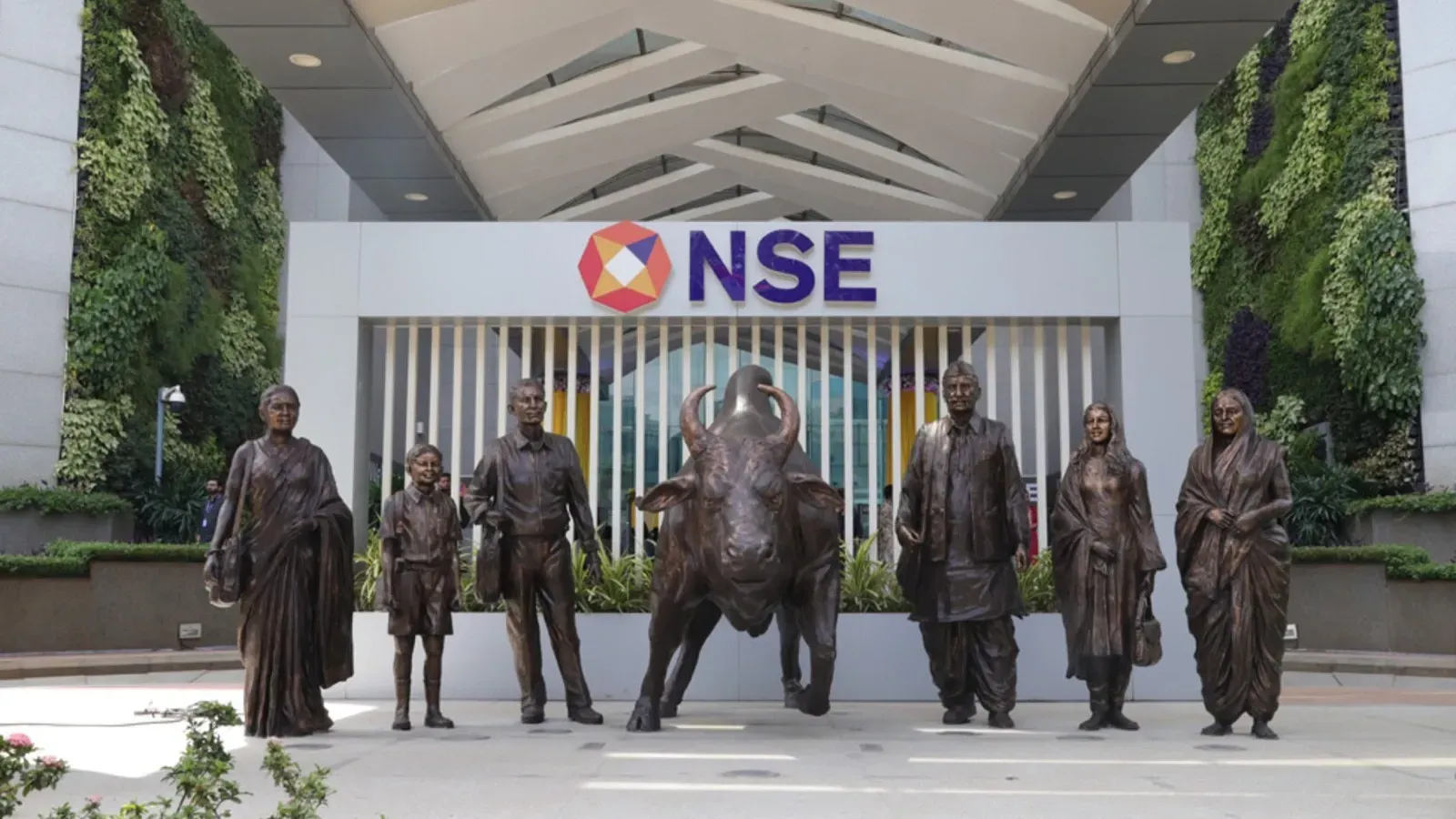
Why is NSE, despite its large market cap, not in the NIFTY50?
NSE shares are listed on the Bombay Stock Exchange (BSE), not on the NSE itself, due to current regulations preventing an exchange from listing on its own platform. Since the NIFTY50 requires stocks to trade on NSE and be part of its F&O segment, NSE shares do not qualify.
Although NSE has requested regulatory changes to allow self-listing or permitted trading on its platform, until these are approved, NSE shares remain excluded from the NIFTY50.
What other criteria affect inclusion in the NIFTY50?
The index reviews changes twice a year, using six-month average data to avoid frequent turnover. New entrants must have an average free-float market cap at least 1.5 times that of the smallest current member to join. This buffer prevents stocks from moving in and out too often.
Additionally, stocks must have sufficient liquidity, measured by impact cost, and must trade on every trading day during the review period.
Why are companies like Hindustan Aeronautics, Adani Power, Divi’s Laboratories, and DMart not included?
While these companies have free floats higher than some smaller NIFTY50 members, they may not meet the 1.5 times free-float market cap threshold or other criteria during the review period. For instance, Divi’s Laboratories had a six-month average free float below the required level in the September 2026 review but is considered a possible entrant in the next review.
What is the impact of these rules on investors?
These selection rules ensure that the NIFTY50 index remains a reliable and liquid benchmark for investors. Stocks in the index are easier to buy and sell in large quantities, which benefits passive funds and ETFs that track the index.
However, investors should understand that a company’s large market capitalization alone does not guarantee inclusion in the NIFTY50. Free-float, trading venue, liquidity, and index rules all play vital roles.
Frequently Asked Questions
Q: Can LIC join the NIFTY50 index soon?
A: LIC's free float has increased recently but remains below the threshold needed for NIFTY50 inclusion. Further increases in public shareholding and free float would be necessary.
Q: Why can't NSE list its shares on its own exchange?
A: Current regulations prohibit an exchange from listing its own shares on its platform. NSE is seeking regulatory approval to change this, but until then, its shares trade only on BSE.
Q: How often does the NIFTY50 index change its constituents?
A: The index reviews its constituents twice a year, in March and September, based on six-month average data.
Q: What is free-float market capitalization?
A: Free-float market capitalization is the value of shares available for public trading, excluding promoter and strategic holdings.