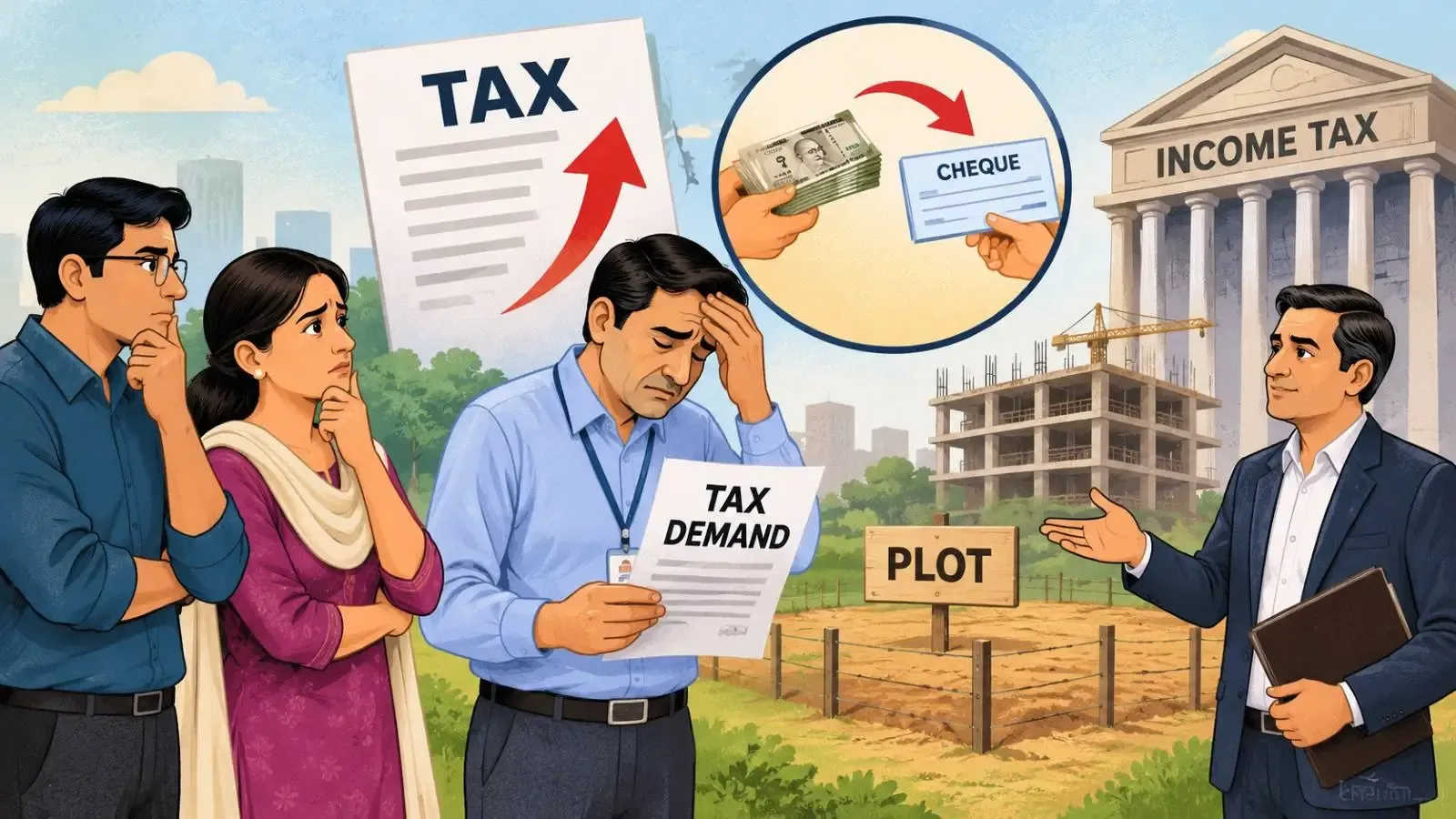
What happens when a government employee pays cash for a property, then reverses the payment and pays by cheque, but the tax authorities still add the cash amount to his income? The Income Tax Appellate Tribunal (ITAT) recently ruled on such a case, clarifying how cash payments and their reversals are treated for tax purposes.
- The employee initially paid ₹2.50 lakh in cash for a plot and received a receipt.
- The builder returned the cash the same day and asked for a 20% booking amount, which the employee paid by cheque.
- The tax department added the ₹2.50 lakh cash payment to the employee's income, suspecting it was unaccounted on-money.
- The ITAT found the employee’s explanation and documentation consistent and ruled that no on-money was paid.
- The ruling emphasizes the importance of keeping all transaction records, including receipts and bank statements.
What Was the Background of the Case?
Vijay Rambhau Pandav, a salaried government employee from Maharashtra, bought a plot in Aurangabad for ₹15,62,000. On January 3, 2020, he paid ₹2.50 lakh in cash to a staff member of the builder, Gadiya Group, and received a receipt. Later that day, the builder’s director returned the cash and requested a 20% booking amount of ₹3,12,000 instead. Pandav accepted this, returned the cash, and paid ₹3,00,000 by cheque the same day, with an additional ₹12,000 paid by NEFT later.
Why Did the Tax Department Add the Cash Payment to His Income?
The Income Tax Department received information during a search at the builder’s premises that suggested Pandav had paid ₹2.50 lakh as on-money (an illegal cash payment) for the plot. Based on this, they reopened his case and added the ₹2.50 lakh to his taxable income. Pandav’s appeal was initially dismissed due to a delay in filing.
How Did the ITAT Evaluate the Evidence?
At the tribunal, Pandav did not deny paying ₹2.50 lakh in cash but explained that the builder returned the cash and asked for payment by cheque instead. He provided evidence of withdrawing ₹40,000 and ₹1,70,000 from his bank account and having ₹40,000 in cash already, matching the amount paid. The receipt showing the cash payment was found at the builder’s office during the search but not with Pandav.
The tribunal found the sequence of events logical and consistent. It noted that the initial payment was made to a staff member unaware of procedures, and the builder’s director corrected the process by returning the cash and requesting cheque payment. The tribunal accepted Pandav’s explanation and evidence of legitimate sources for the cash.
What Was the Final Decision?
The ITAT ruled that the ₹2.50 lakh cash payment was from explained sources and was returned to the builder. Therefore, it should not be treated as unaccounted income. The tribunal set aside the earlier order and directed the tax officer to delete the addition of ₹2.50 lakh from Pandav’s income.
What Are the Key Lessons for Property Buyers?
This case highlights the importance of maintaining clear documentation for all property transactions, especially when cash payments are involved. A receipt found at the seller’s office only proves that cash changed hands, not that it was retained. Buyers should keep acknowledgments of any returned payments, bank withdrawal records, and proof of subsequent cheque or electronic payments.
Proper documentation can protect buyers from allegations of unaccounted on-money and avoid unnecessary tax additions. This ruling is particularly relevant for government employees and others whose transactions may be scrutinized closely.