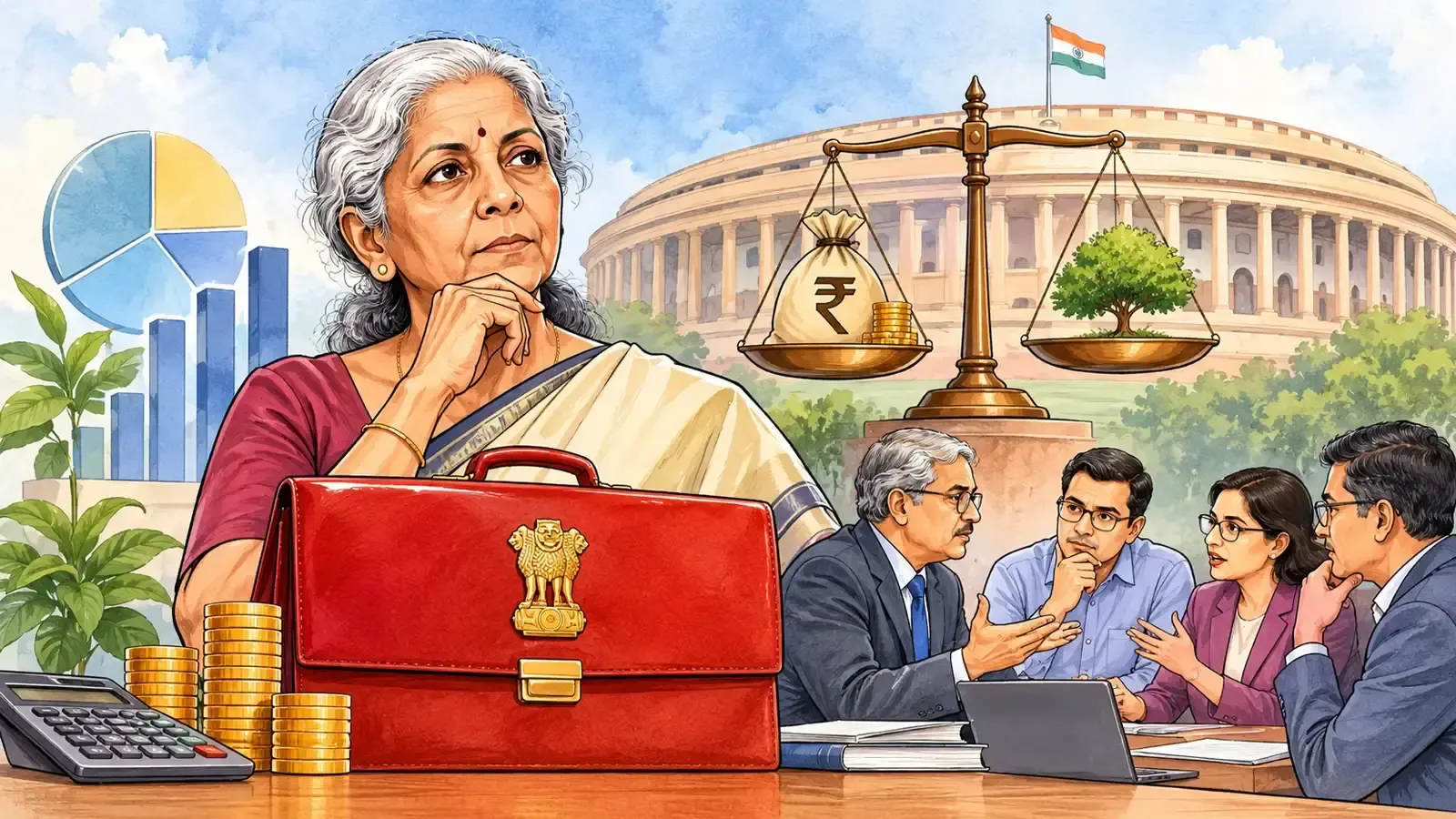
As the Union Budget 2027-28 approaches, a key question arises: will the government change the Long-Term Capital Gains (LTCG) tax for domestic equity investors? Economists advising the Ministry of Finance recommend keeping the current LTCG tax structure unchanged. They base this advice on expectations of falling inflation and positive economic signals.
- Economists suggest no change to LTCG tax for domestic investors.
- Inflation is expected to decline due to favorable geopolitical factors.
- Industry groups propose reducing or removing LTCG tax to support investors.
- Suggestions include revising tax rules for foreign portfolio investors (FPIs).
- Government has not made any decisions before the budget announcement.
Why do economists recommend maintaining the LTCG tax status quo?
Economists consulted by the Ministry of Finance believe that the economy is showing "green shoots," meaning early signs of growth. They note that private investments are increasing and inflation is under control. Favorable geopolitical developments and a potential drop in oil prices are expected to reduce inflation further. These factors provide the government with enough fiscal space, so they advise against changing the LTCG tax for domestic investors at this time.
What are the views of industry stakeholders on LTCG tax?
Several industry bodies and financial institutions have urged the government to reconsider the LTCG tax structure. For example, the Federation of Indian Chambers of Commerce and Industry (FICCI) has recommended removing the LTCG tax on listed equities. The PHD Chamber of Commerce and Industry (PHDCCI) has also called for scrapping the LTCG tax and reducing the Short-Term Capital Gains (STCG) tax rate from 20% to 10%. These groups argue that lowering taxes would make the domestic securities market more competitive and provide relief to investors amid market volatility.
How is the LTCG tax currently structured?
At present, LTCG tax on listed equity shares and equity-oriented mutual funds is charged at a flat rate of 12.5% on gains exceeding ₹1.25 lakh in a financial year. The STCG tax rate is 20%. The Securities Transaction Tax (STT) is also applied, and some stakeholders have suggested reviewing or rationalizing it to reduce transaction costs.
Are there suggestions for foreign portfolio investors (FPIs)?
Economists have proposed revising the tax treatment for FPIs. Unlike domestic investors, FPIs currently enjoy tax exemption on LTCG in many emerging markets. The suggestion includes computing gains for FPIs in US dollar terms to align with international practices. This could help attract more foreign investment while maintaining domestic tax policies.
Has the government made any decisions yet?
As of now, no decisions have been finalized. Central Board of Direct Taxes (CBDT) Chairman Ravi Agrawal stated that the government is still analyzing feedback from various stakeholders. Any changes to capital gains taxes or STT will be announced with the Union Budget 2027-28.
Frequently Asked Questions
Q: What is the current LTCG tax rate on equities?
A: The LTCG tax on listed equity shares and equity-oriented mutual funds is 12.5% on gains exceeding ₹1.25 lakh in a financial year.
Q: Why do economists want to keep the LTCG tax unchanged?
A: They expect inflation to fall further due to favorable geopolitical conditions and believe the economy is showing signs of growth, providing fiscal space to maintain current tax rates.
Q: What changes do industry groups want?
A: Industry bodies like FICCI and PHDCCI want the LTCG tax removed or reduced to boost market competitiveness and reduce investor burden.
Q: Will the government announce changes before the budget?
A: No decisions have been made yet. The government is reviewing stakeholder inputs and will announce any changes with the Union Budget 2027-28.