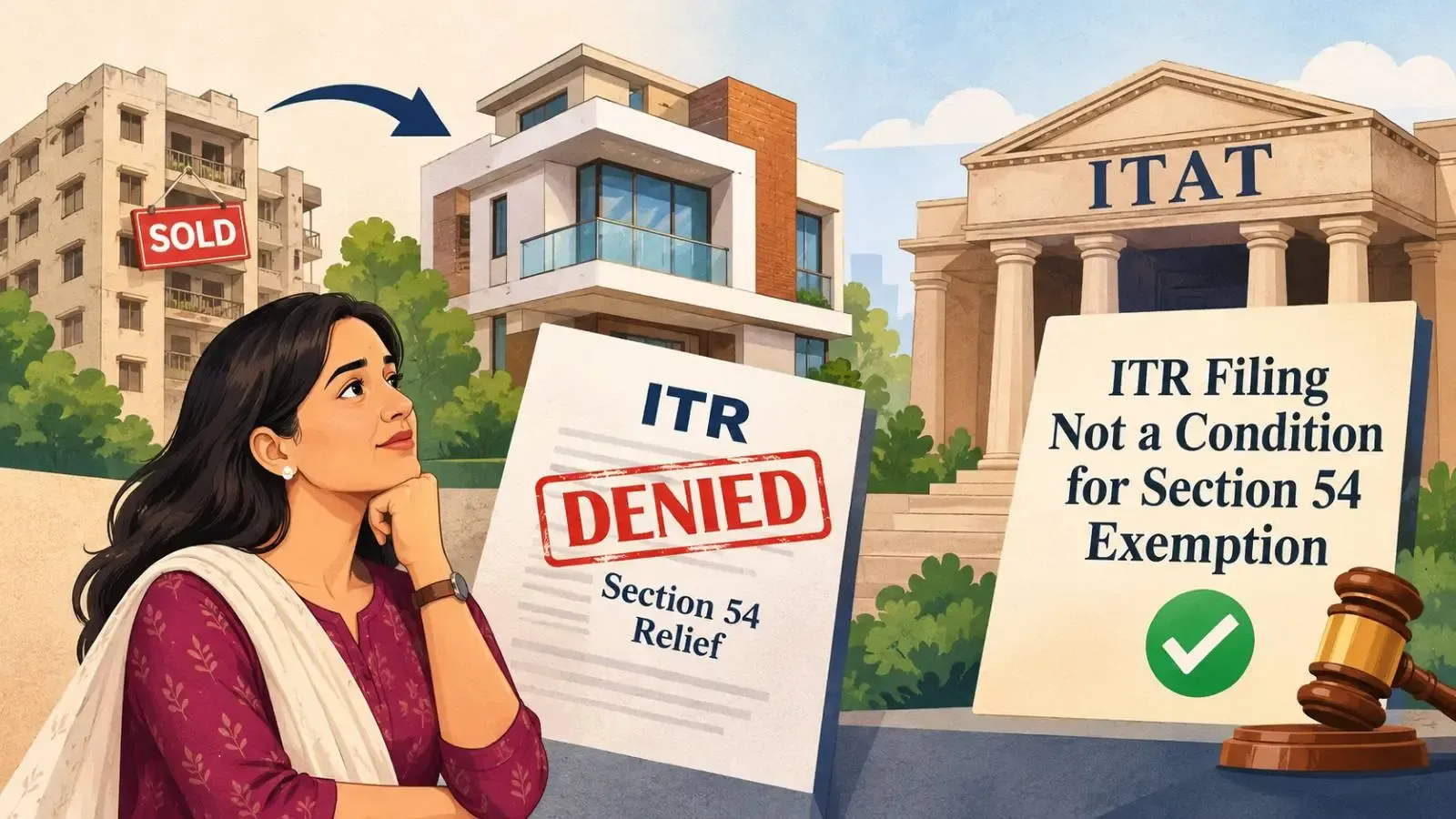
The Income Tax Appellate Tribunal (ITAT) recently clarified that filing the original Income Tax Return (ITR) is not a mandatory condition to claim exemption under Section 54 of the Income Tax Act. This ruling came after a non-resident taxpayer, Margaret Smith from Jodhpur, was denied the exemption despite purchasing a new residential property after selling her old flat. The tribunal’s decision emphasizes that procedural lapses should not override substantive rights to tax exemptions.
- Section 54 provides exemption from long-term capital gains tax when gains from selling a residential property are reinvested in another residential house.
- The taxpayer did not file the original ITR but submitted a return after receiving a notice under Section 148.
- The tax authorities initially denied the exemption, citing the absence of the original return filing.
- The ITAT ruled that filing the original return is not a condition for claiming Section 54 exemption.
- The tribunal ordered the tax officer to allow the exemption and delete the addition of capital gains income.
What is Section 54 and who can claim it?
Section 54 of the Income Tax Act grants a deduction from long-term capital gains arising from the sale of a residential house if the gains are reinvested in purchasing or constructing another residential house. The new property must be bought within one year before or two years after the sale, or constructed within three years.
Why was the exemption initially denied?
Margaret Smith sold her old flat and bought a new one within the required time frame. However, she did not file the original ITR for the assessment year 2016-17. The tax department issued a notice under Section 148, after which she filed a return declaring minimal income. Despite this, the Dispute Resolution Panel (DRP) denied her Section 54 exemption solely because she had not filed the original return.
What did the ITAT say about ITR filing and Section 54?
The ITAT noted that Section 54 does not link the exemption to the filing of the original return. The only mention of return filing is in Section 54(2), which deals with depositing unutilized capital gains in a Capital Gains Account Scheme before filing the return. Since the entire gain was reinvested, this section did not apply. The tribunal also pointed out that the return filed under Section 148 is treated as a valid return for claiming exemptions.
How did the tribunal address the tax department's arguments?
The tax authorities had argued that no original return was filed, so the exemption claim was invalid. The ITAT found this to be contrary to the records, as the taxpayer had filed a return after receiving the notice. The tribunal also referenced previous rulings supporting the right to claim Section 54 exemption in returns filed under Section 148.
What is the significance of this ruling for taxpayers?
This ruling is important for taxpayers, including non-residents, who may have missed filing their original ITR but still want to claim exemptions on capital gains from property transactions. It clarifies that procedural lapses like delayed return filing should not deny substantive tax benefits if the conditions of Section 54 are met.
Frequently Asked Questions
Q: Can I claim Section 54 exemption if I file my return late?
A: Yes, according to the ITAT ruling, filing the original return on time is not mandatory. You can claim the exemption in a return filed later under Section 148, provided all other conditions are satisfied.
Q: What are the time limits for purchasing a new house under Section 54?
A: You must buy the new residential house within one year before or two years after selling the old one, or construct it within three years.
Q: Does this ruling apply to non-resident taxpayers?
A: Yes, the ruling is relevant to all taxpayers, including non-resident individuals, who sell or buy residential property and claim exemption under Section 54.
This case highlights the importance of focusing on the substantive fulfillment of tax exemption conditions rather than procedural technicalities. Taxpayers should ensure proper documentation and timely reinvestment to benefit from Section 54 relief.