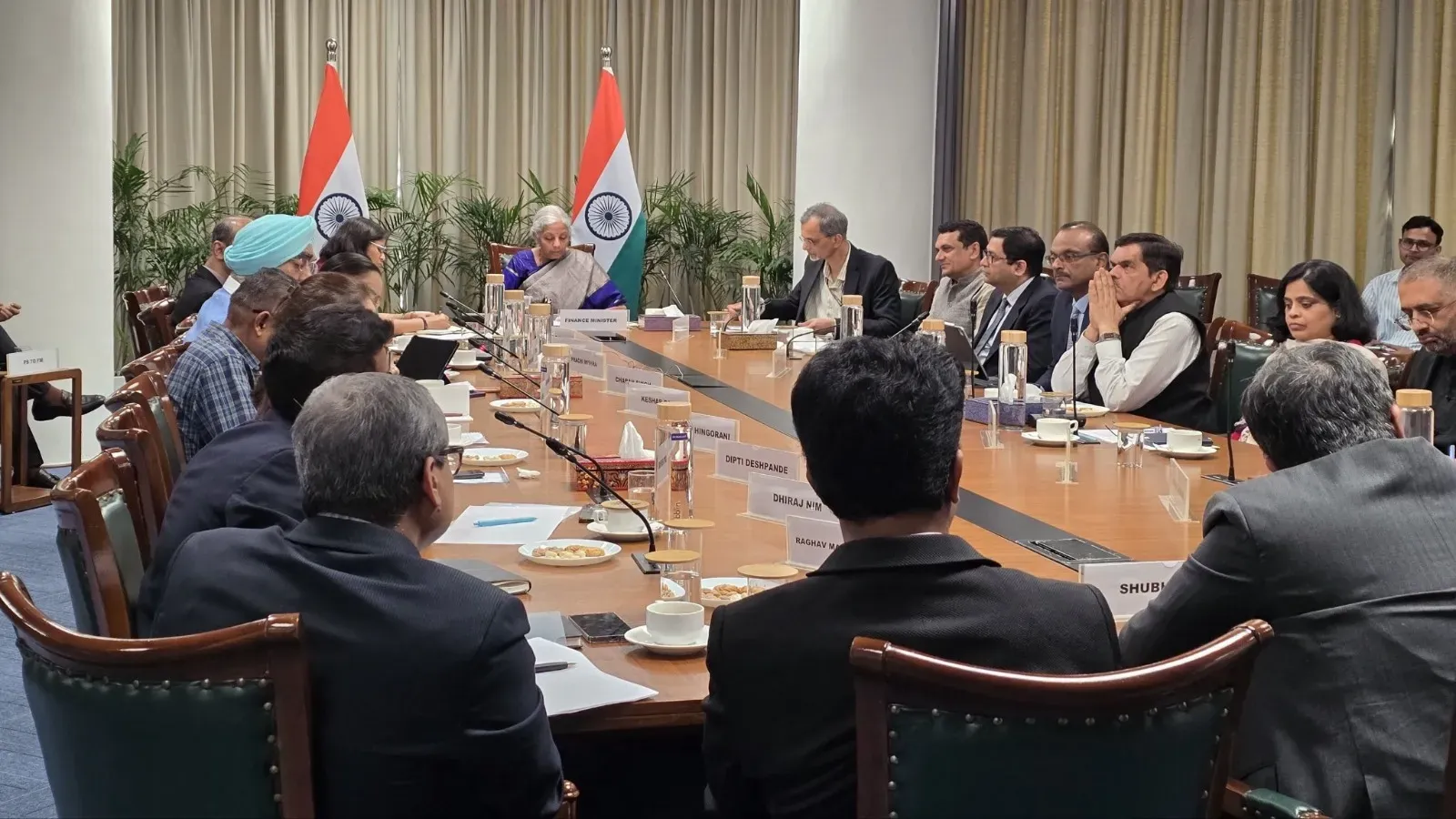
Finance Minister Nirmala Sitharaman chaired the first pre-Budget consultation with leading economists on November 16, 2026, to prepare for the Union Budget 2027-28. This meeting is part of the Finance Ministry's effort to collect advice from experts before finalizing the budget proposals. The consultation comes at a time when the government is facing challenges related to fiscal pressures and global economic uncertainties.
- The consultation helps gather expert inputs for the upcoming budget.
- The government aims to sustain economic growth while managing fiscal deficit.
- Fiscal deficit for FY27 was targeted at 4.3% of GDP, with concerns about meeting this goal.
- Capital expenditure was increased to ₹12.2 lakh crore for FY27.
- External factors like the West Asia conflict and subsidy demands affect fiscal planning.
- Rating agency ICRA predicts a fiscal slippage of ₹95,000 crore in FY27.
- The Reserve Bank of India raised GDP growth forecast to 7.1% for the current fiscal.
- Fiscal deficit target for FY28 may be set between 4.2% and 4.3% of GDP.
Why did the Finance Minister hold a pre-Budget consultation with economists?
The Finance Minister held the consultation to gather expert opinions and advice before preparing the Union Budget for the fiscal year 2027-28. This helps the government consider different viewpoints and economic forecasts to make informed decisions. The meeting included senior officials such as the Secretary of the Department of Economic Affairs and the Chief Economic Adviser.
What are the main fiscal challenges facing the government?
The government is trying to maintain economic growth while sticking to its fiscal consolidation plan. For FY27, the fiscal deficit was targeted at 4.3% of GDP, slightly lower than the previous year’s 4.4%. However, factors like the conflict in West Asia, increased subsidy needs, and lower-than-expected tax collections have raised concerns about meeting this target.
How has the government adjusted its spending plans?
In the FY27 budget, the government increased capital expenditure to ₹12.2 lakh crore, up from ₹11 lakh crore in the previous year’s revised estimates. This shows a focus on investment to support growth despite fiscal pressures.
What do experts say about the fiscal outlook?
Rating agency ICRA estimates a net fiscal slippage of around ₹95,000 crore for FY27. This is due to higher subsidies, lower excise and direct tax collections, and reduced dividends from oil marketing companies. However, some of this impact may be offset by higher customs duty collections and a ₹1 lakh crore allocation under the Economic Stabilisation Fund.
What is the current status of the fiscal deficit?
According to ICRA, the Centre’s fiscal deficit was ₹4.6 lakh crore during April to July 2026, which is 26.8% of the FY27 budget estimate. This is slightly lower compared to the same period last year, when it was ₹4.7 lakh crore or 30.8% of the previous fiscal’s provisional actuals.
What is the economic growth forecast for the current fiscal year?
The Reserve Bank of India has raised its GDP growth forecast for the current fiscal year to 7.1%, an increase of 40 basis points. This optimistic outlook supports the government’s efforts to balance growth with fiscal responsibility.
What are the expectations for the FY28 budget targets?
Reports suggest that the government may set the fiscal deficit target for FY28 between 4.2% and 4.3% of GDP. Nominal GDP growth is expected to be between 10.5% and 11%. These targets reflect the government’s aim to continue fiscal consolidation while supporting economic growth.
What is the significance of these consultations?
The pre-Budget consultations with economists are an important step in the budget-making process. They allow the government to consider expert advice and economic trends before finalizing its financial plans. This helps create a balanced budget that addresses both growth and fiscal discipline.