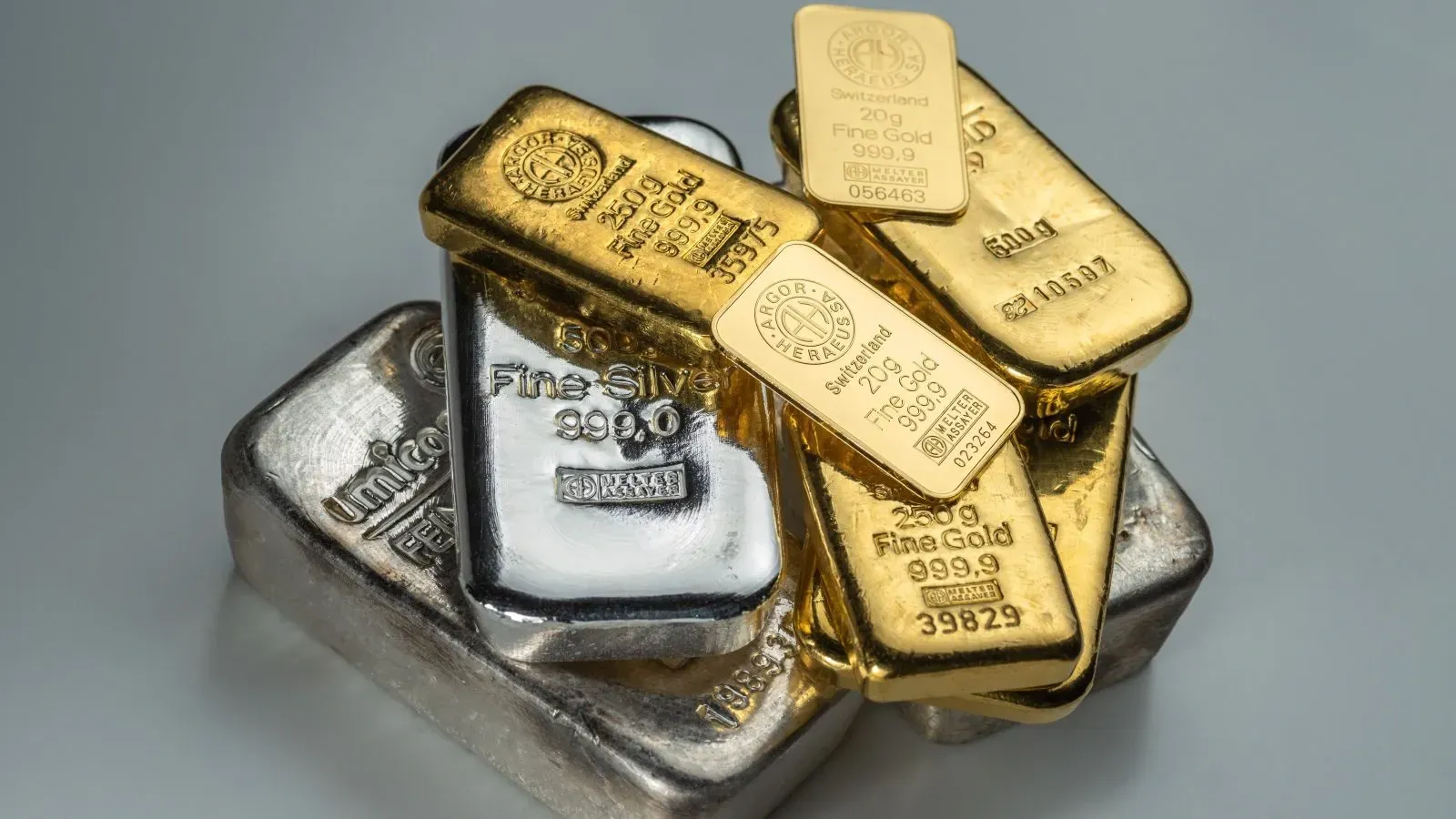
Gold prices on the Multi Commodity Exchange (MCX) fell by 2% on November 16, 2026, reaching a record low of ₹1,34,000 per 10 grams. Silver prices also tumbled sharply by 4%, hitting a new low amid growing bets on a US Federal Reserve interest rate hike. These declines reflect changes in global markets and investor expectations.
- MCX gold for December delivery dropped 2%, trading near ₹1,35,076 per 10 grams.
- Silver contracts for December delivery fell over 4% to ₹1,69,194 per kilogram.
- COMEX gold prices declined 1.31% to $3,835.20 per troy ounce.
- COMEX silver futures dropped 4.2% to $47.065 per ounce.
- Stronger US dollar and higher Treasury yields pressured gold and silver prices.
- US consumer price index rose 0.4% in October, increasing expectations of a Fed rate hike.
- Market sees a 92% chance of a 25 basis points Fed rate increase in December.
Why Did Gold and Silver Prices Fall on November 16?
Gold and silver prices fell due to a combination of factors linked to the US economy. The US dollar strengthened, and Treasury yields rose, both of which typically reduce the appeal of precious metals. Investors expect the US Federal Reserve to raise interest rates soon, which makes non-yielding assets like gold and silver less attractive.
How Did Global Markets React to These Changes?
In global markets, COMEX gold contracts for December delivery slipped by as much as 1.31%, reaching an intraday low of $3,835.20 per troy ounce. This was down from the previous close of $3,886.30. At the time of reporting, gold was trading at $3,853.40 per troy ounce, down 0.85% or $32.90.
Similarly, COMEX silver futures for December delivery dropped 4.2% to an intraday low of $47.065 per ounce, compared to the previous close of $49.121. Silver was trading 3.36% lower at $47.47 per troy ounce.
What Economic Data Influenced These Price Movements?
The US consumer price index (CPI) data released showed a seasonally adjusted 0.4% increase in prices in October. This inflation data heightened expectations that the Federal Reserve will raise interest rates in December to control inflation. The market currently assigns a 92% probability to a 25 basis points rate hike and an 8% chance of a 50 basis points hike, according to CME Group's FedWatch tool.
What Are Investors Watching Next?
Investors are closely awaiting remarks from Federal Reserve Chair Kevin Warsh for further clues on the interest rate outlook. Additionally, the minutes from the October Federal Open Market Committee (FOMC) meeting, scheduled for release on Wednesday, will provide more insight into the Fed's future policy direction.
Frequently Asked Questions
Q: Why do gold and silver prices fall when interest rates rise?
A: When interest rates rise, the US dollar often strengthens, and bonds yield more attractive returns. This reduces demand for gold and silver, which do not pay interest or dividends, causing their prices to fall.
Q: What does a basis point mean in interest rate changes?
A: A basis point is one hundredth of a percentage point (0.01%). So, a 25 basis points hike means the interest rate increases by 0.25%.
Q: How do inflation numbers affect gold prices?
A: Higher inflation usually increases gold prices as investors seek a hedge. However, if the Federal Reserve raises rates aggressively to control inflation, gold prices can fall due to higher yields on other investments.