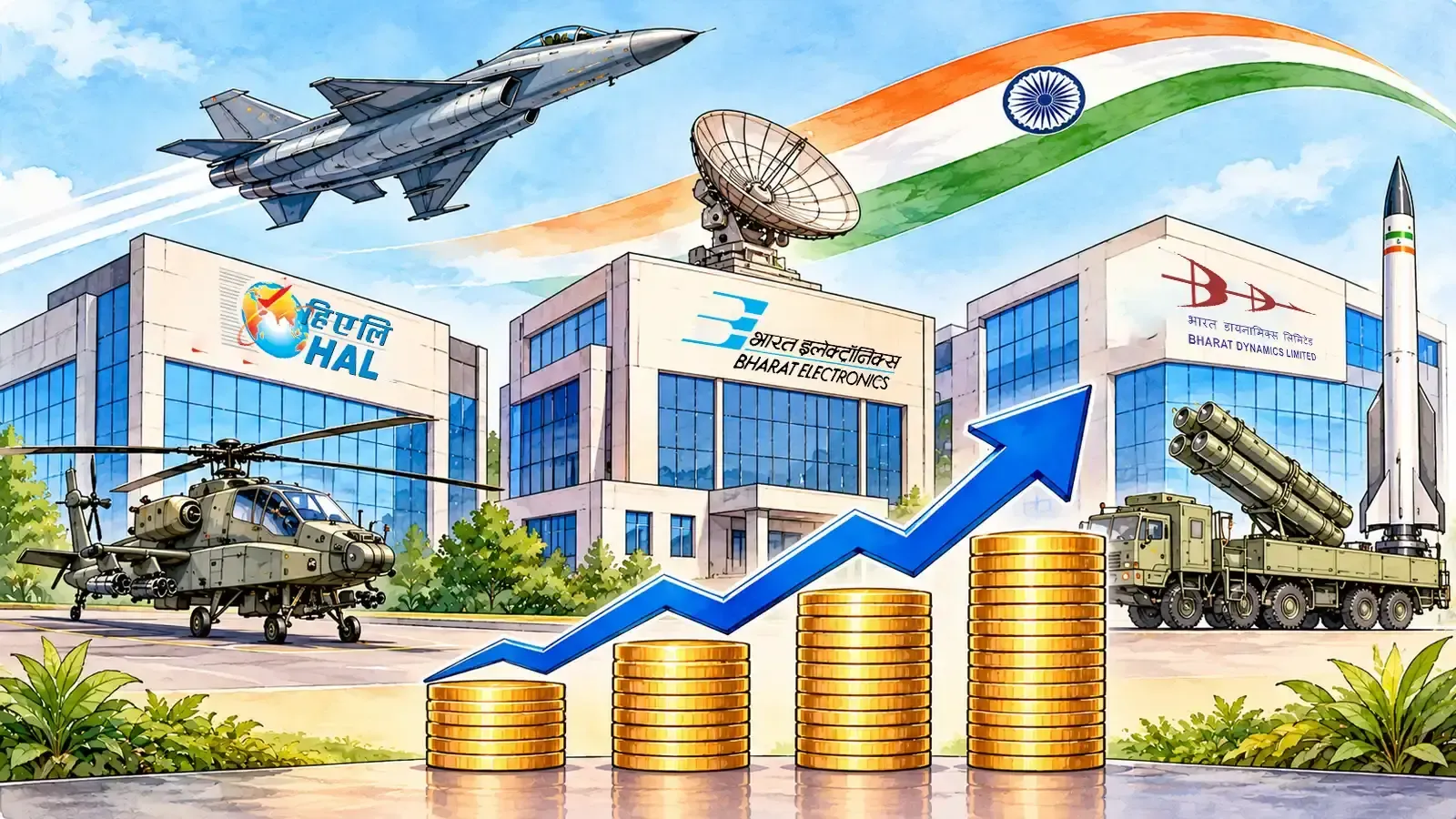
In the September quarter, three major Indian defence manufacturers—Hindustan Aeronautics Limited (HAL), Bharat Electronics Limited (BEL), and Bharat Dynamics Limited (BDL)—all reported higher revenues. However, their profit growth showed different trends, reflecting the complexities of defence production and sales.
- HAL and BEL posted solid double-digit growth in both revenue and net profit.
- BDL recorded the highest revenue growth at 45.1% year-on-year but experienced a 15% decline in net profit.
- Operating margins varied, with HAL’s margin slightly improving, BEL’s margin declining, and BDL’s margin contracting sharply.
- Rising expenses and production challenges impacted profitability, especially for BDL.
How did revenue and profit perform across the three defence companies?
All three companies increased their revenue from operations compared to the previous year. Hindustan Aeronautics' revenue rose by 14.9%, and its net profit grew by 16%. Bharat Electronics saw revenue increase by 26.5% and net profit by 19.7%. Bharat Dynamics led in revenue growth with a 45.1% rise to ₹1,664 crore but faced a 15% drop in net profit to ₹183 crore.
Why did Bharat Dynamics’ profit decline despite strong revenue growth?
BDL’s total expenses rose by 61.7%, outpacing its revenue growth. Although the cost of materials consumed decreased, significant increases in finished goods and work-in-progress expenses affected profitability. Other income helped soften the impact, increasing from ₹120.57 crore to ₹167.07 crore, but was not enough to offset the higher costs fully.
What influenced operating margins and profitability at HAL and BEL?
HAL’s net profit margin improved slightly from 25.18% to 25.42%, but its operating EBITDA margin fell from 23.50% to 22.85%. This was due to higher material costs absorbing more revenue. However, increased other income and joint venture profits supported net profit growth.
BEL’s net profit margin declined from 22.22% to 21.02%, with materials and inventory costs consuming a larger revenue share. Despite this, BEL’s operating margin improved quarter-on-quarter, showing some operational efficiency gains.
How do order books and production schedules affect these companies?
Order books for these defence companies span several years, and higher revenue reflects more business being recognized but does not guarantee timely profit realization. For example, HAL’s delivery of the Tejas Mk1A fighter jet depends on engine availability, flight testing, and customer acceptance. An aircraft cannot be delivered without a functioning engine, even if the order exists.
BEL continues to work on radars, electronic warfare systems, and awaits approval for the Quick Reaction Surface-to-Air Missile (QRSAM) order. Expected contracts and confirmed orders remain distinct.
BDL announced a ₹1,307 crore order in October 2026 with a 42-month execution period. Production and delivery schedules, along with component availability and customer acceptance, will influence revenue and profit recognition over time.
What are the key takeaways from the Q2 results of these defence PSUs?
- Revenue growth is strong across HAL, BEL, and BDL, showing robust demand in the defence sector.
- Profit growth varies due to differences in cost management, operating margins, and production challenges.
- Order books provide a long-term view but do not directly translate into immediate profits.
- Future results will reveal how contracts convert into profit and cash flow, especially for BDL.
Frequently Asked Questions
Q: Why did Bharat Dynamics’ net profit decline despite high revenue growth?
A: BDL’s expenses rose faster than its revenue, particularly due to increased costs in finished goods and work-in-progress, which reduced profitability despite higher sales.
Q: How do order books affect the companies’ financial results?
A: Order books represent future work spread over years. Revenue and profit depend on production progress, component availability, and customer acceptance, so orders do not immediately translate into profits.
Q: What factors helped HAL and BEL increase their net profits?
A: Both companies benefited from strong domestic demand and indigenisation efforts. HAL also gained from higher other income and joint venture profits, while BEL improved operational efficiency quarter-on-quarter.