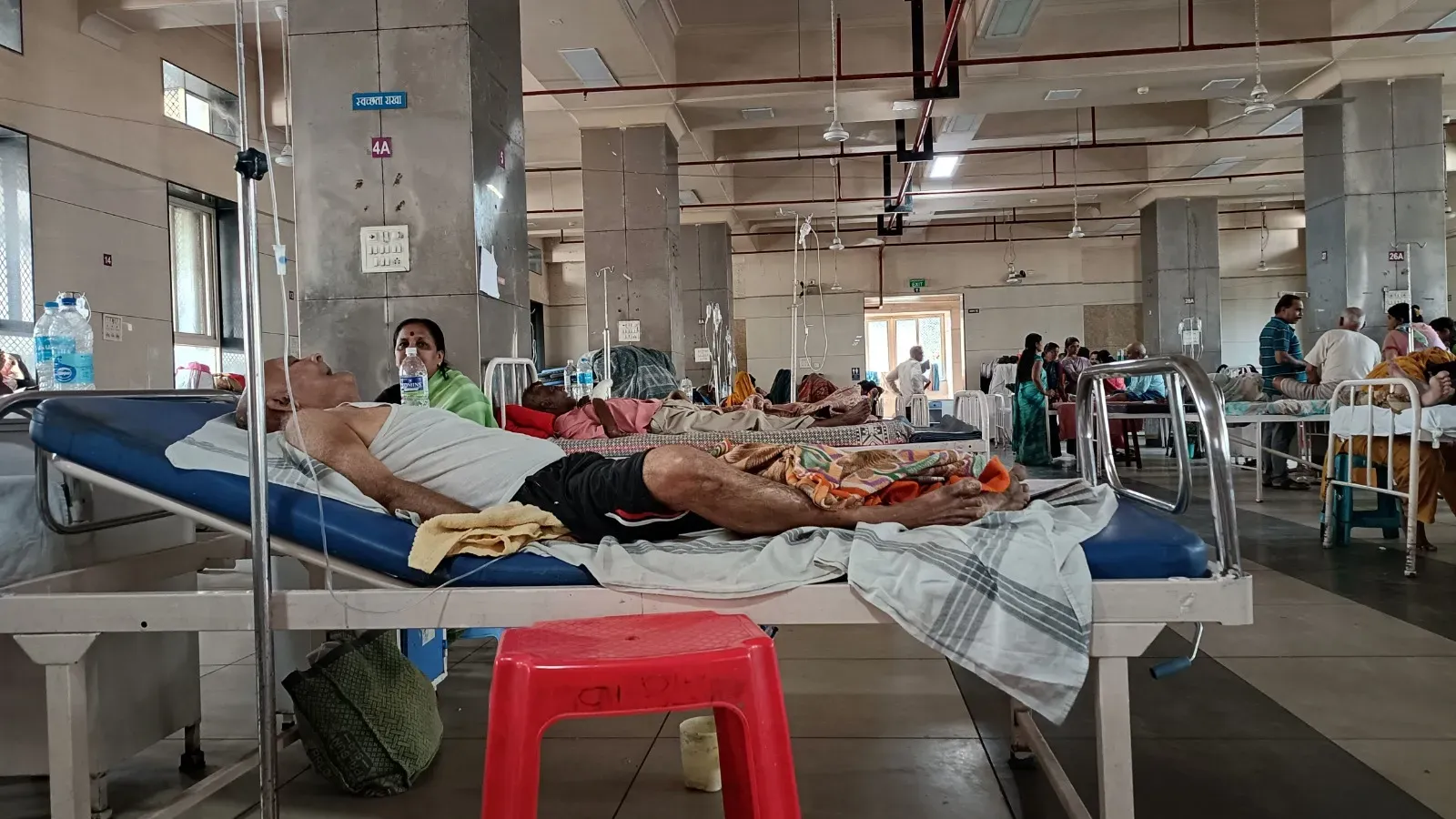
Government health spending in India has more than tripled over the last decade, reaching ₹4.14 lakh crore in 2023-24. However, this spending still accounts for only 1.43% of the country's Gross Domestic Product (GDP), according to the latest National Health Accounts (NHA) estimates. The increase reflects a strong government commitment to improving healthcare, but households continue to bear a large share of healthcare costs.
- Government health expenditure rose from ₹1.30 lakh crore in 2013-14 to ₹4.14 lakh crore in 2023-24.
- Government spending accounts for 43.5% of total health expenditure, up from 28.6% a decade ago.
- State governments contribute 67.9% of government health expenditure; the Union government contributes 32.1%.
- Out-of-pocket expenditure by households remains high at 42.66% of total health spending.
- Per capita government health spending increased from ₹1,042 to ₹2,959 over ten years.
How much has government health spending increased in India?
Government health expenditure (GHE) in India has increased significantly over the past decade. It rose from ₹1.30 lakh crore in 2013-14 to ₹4.14 lakh crore in 2023-24, more than tripling in absolute terms. This increase shows the government's sustained efforts to strengthen the healthcare sector.
In per capita terms, government health spending increased from ₹1,042 to ₹2,959 during this period, indicating more resources are being allocated per person for healthcare.
What share of total health expenditure does the government cover?
The government's share of total health expenditure rose from 28.6% in 2013-14 to 43.5% in 2023-24. Despite this growth, government health spending remains at 1.43% of GDP, which is relatively low compared to many other countries.
State governments are the major contributors to government health spending, accounting for 67.9%, while the Union government contributes 32.1%. This distribution highlights the important role of state governments in healthcare financing.
How much do households pay for healthcare out of their own pockets?
Households continue to bear a substantial burden of healthcare costs. Out-of-pocket expenditure (OOPE) by households is estimated at ₹4,06,197 crore, which is 42.66% of the total health expenditure in 2023-24.
Out-of-pocket spending refers to direct payments made by households at the time of receiving healthcare services. High OOPE indicates limited financial protection for families and can lead to financial hardship.
What is the role of health insurance in India’s healthcare spending?
Private health insurance expenditure accounts for 10.2% of total health spending, amounting to ₹97,167 crore. Additionally, government-financed health insurance schemes contributed ₹33,385 crore.
These insurance schemes help reduce the financial burden on households but currently cover a smaller portion of total health expenditure compared to out-of-pocket payments.
How does health spending vary across Indian states?
There is significant variation in health spending and out-of-pocket costs across states. For example, households in Uttar Pradesh paid 67.1% of the state's total healthcare expenditure out of pocket, the highest among states. Kerala and West Bengal also have high household spending shares at 65.2% and 63%, respectively.
In contrast, Uttarakhand recorded the lowest household out-of-pocket share at 26.7%, followed by Karnataka at 28.5% and Jammu and Kashmir at 33.5%. These states have higher government health expenditure shares, with Uttarakhand’s government spending covering 66% of total health costs.
Per capita health expenditure is highest in Kerala at ₹13,605, followed by Himachal Pradesh and Maharashtra, indicating better healthcare investment per person in these states.
What do these health spending trends mean for India?
The tripling of government health expenditure is a positive sign of increased investment in healthcare. However, the low percentage of GDP spent on health and the high out-of-pocket expenses for households suggest that many people still face financial challenges in accessing healthcare.
Improving government health spending as a share of GDP and expanding financial protection through insurance and public health services will be important steps to reduce the burden on households and improve health outcomes across India.