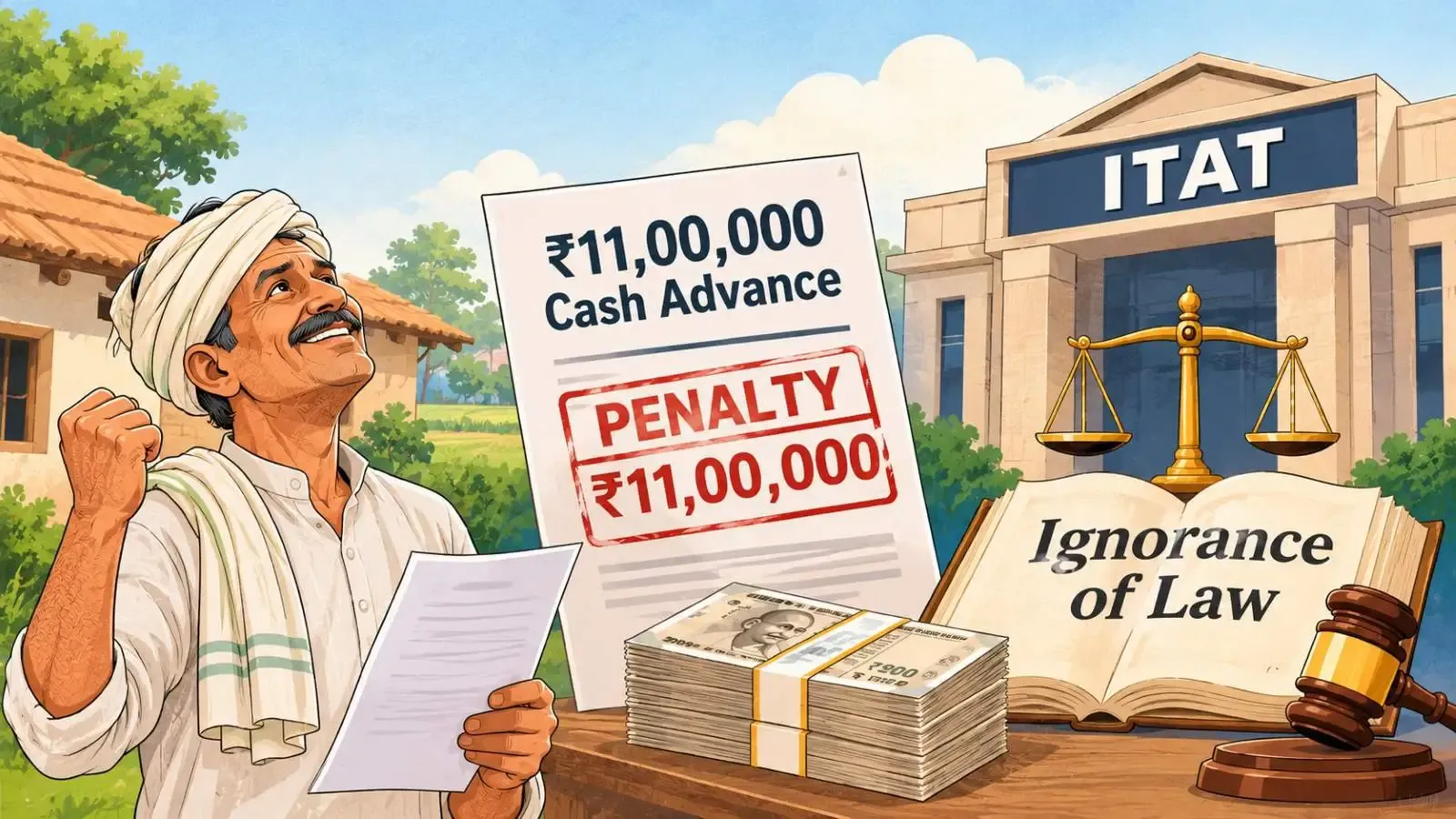
What happens if you accept a large cash advance when selling property? A recent Income Tax Appellate Tribunal (ITAT) ruling involving a farmer from Kota district answers this question. Omprakash Saloniya sold his house for ₹22,50,000 and received ₹11,00,000 in cash as advance. This cash receipt violated Section 269SS of the Income-tax Act, which prohibits accepting more than ₹20,000 in cash for immovable property transactions. As a result, the Income Tax Department imposed a penalty equal to the cash amount, but the ITAT later overturned this penalty, citing reasonable cause and the farmer's genuine circumstances.
What is Section 269SS and why was the penalty imposed?
Section 269SS of the Income-tax Act restricts accepting cash above ₹20,000 as advance or consideration for immovable property sales. This rule aims to curb unaccounted cash transactions. When Saloniya accepted ₹11,00,000 in cash, the assessing officer levied a penalty of ₹11,00,000 under Section 271D, which mandates a penalty equal to the cash amount accepted in violation. The first appellate authority upheld this penalty, stating ignorance of law is not a defense.
What defense did the farmer present?
Saloniya gave several reasons to defend himself:
- He was unaware of the 2015 amendment that introduced the cash limit, as it was not well known in his rural area.
- The sale was registered at ₹22,50,000, much higher than the stamp duty value of ₹8,20,300, showing no intent to evade tax.
- He was willing to accept payment through banking channels but the buyer insisted on cash.
- The Income Tax Department scrutinized the transaction and found no unaccounted income.
How did the ITAT rule on the penalty?
The ITAT disagreed with the first appellate authority and accepted the farmer's plea of ignorance of law as credible. It noted that Saloniya was a non-filer, an agriculturalist from a remote village, and had no prior income tax proceedings. The tribunal found his actions bona fide since the full transaction value was recorded and no tax evasion was detected.
The ITAT also referenced a Supreme Court decision stating there is no presumption that everyone knows the law. Therefore, ignorance of law can be a reasonable cause to avoid penalty under Section 273B. The tribunal held that the penalty under Section 271D was not leviable and set aside the penalty order.
What are the key takeaways for property sellers?
- Accepting cash above ₹20,000 in property transactions violates Section 269SS and can attract a penalty equal to the cash amount.
- However, if the taxpayer can prove bona fide intent, full disclosure, and no tax evasion, they may avoid penalty by showing reasonable cause.
- Ignorance of law may be accepted as reasonable cause in genuine cases, especially for first-time filers from rural areas.
- The safest approach is to conduct property payments through banking channels to avoid penalties.
Frequently Asked Questions
Q: What is the maximum cash advance allowed under Section 269SS?
A: The maximum cash advance allowed for immovable property transactions is ₹20,000. Accepting more than this amount in cash violates the law.
Q: Can ignorance of law be a defense against penalty under Section 271D?
A: While generally ignorance of law is not accepted, the ITAT ruling shows that in genuine cases with reasonable cause, such as first-time filers unaware of amendments, it can be a valid defense.
Q: What should property sellers do to avoid penalties?
A: Sellers should accept payments through banking channels and ensure full disclosure in registered sale deeds to comply with tax laws and avoid penalties.