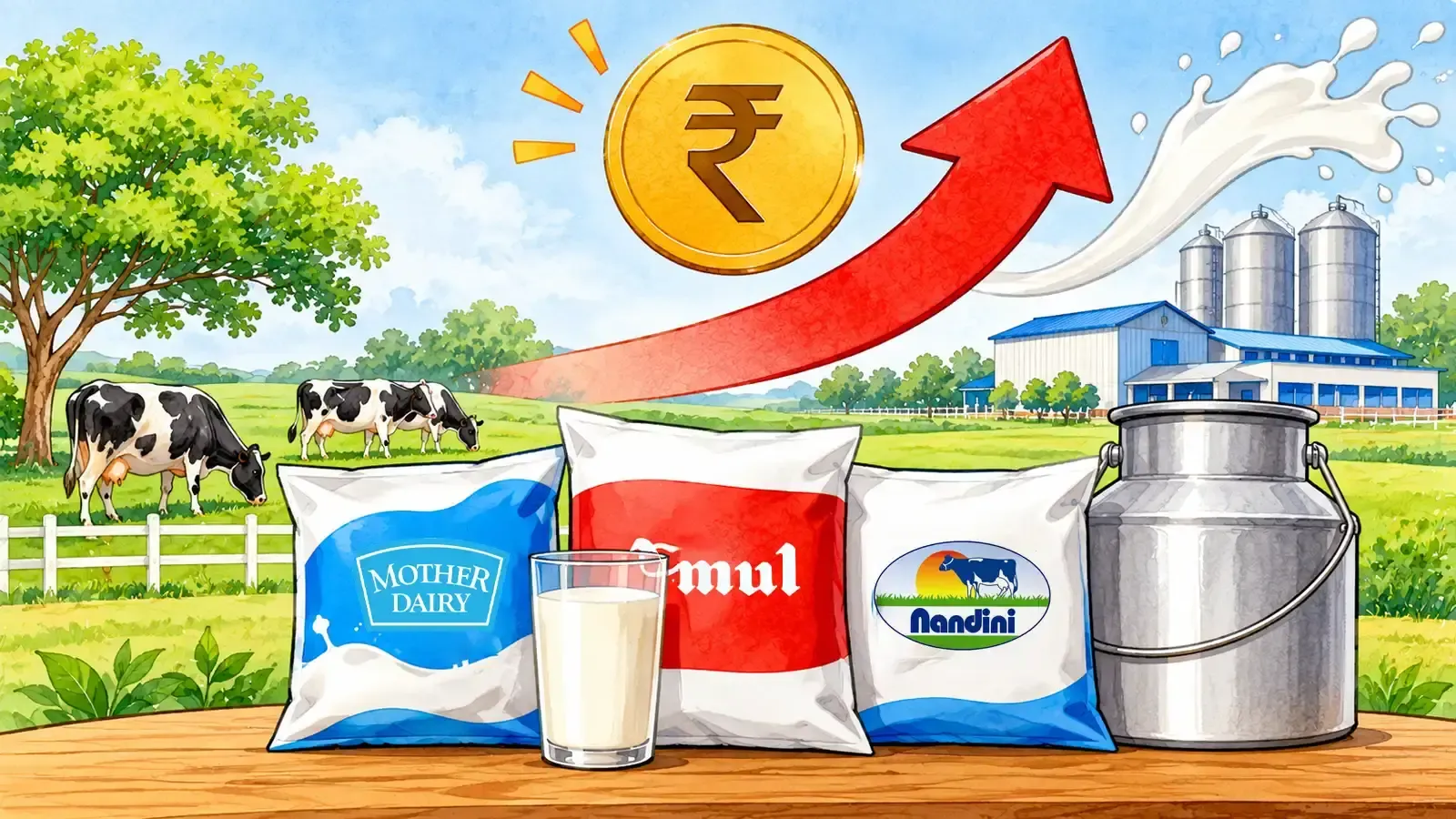
Milk prices in India are increasing again in 2026, with major dairy brands such as Amul, Mother Dairy, and Nandini raising rates by up to ₹8 per litre. This rise is due to higher costs of cattle feed, fuel, packaging, and increased payments to farmers. The price hikes affect not only milk but also many dairy products, impacting consumers across the country.
- Milk prices have risen multiple times in 2026 across various states.
- Higher costs of cattle feed, fuel, and packaging are key reasons for the increase.
- State-backed and private dairy brands have all raised milk prices.
- Increased procurement prices paid to farmers contribute significantly to the hike.
- Milk price rises affect the entire dairy value chain and consumer budgets.
Why are milk prices rising in India in 2026?
Milk prices are rising mainly due to sharp increases in input costs. Feed and fodder, which account for 70-75% of milk production costs, have become more expensive. For example, wholesale prices of oilseed cakes, soybean, and rice bran used in cattle feed increased by 21% to 40% year-on-year in September 2026. The price of maize, another key feed ingredient, is also above the government’s minimum support price.
Fuel costs have risen as well. Diesel prices in Delhi increased by 8.6% from May to November 2026, raising transportation costs for milk, which must be quickly collected and chilled. Packaging costs have also gone up, with the price of plastic films used for milk pouches rising about 31% year-on-year.
How have dairy companies responded to these cost increases?
Major cooperative dairy federations and private brands have raised retail milk prices between ₹2 and ₹8 per litre across different states. For example, Nandini in Karnataka increased prices by ₹8 per litre, while Amul and Mother Dairy raised prices by ₹2 to ₹4 per litre in Delhi NCR. Other state dairies like Gokul Dairy, Aavin, Milma, and Jaipur Dairy have also increased prices.
These companies have also raised the prices they pay farmers for milk. Karnataka increased its base procurement price by 20%, and Tamil Nadu raised prices by about 16%. Amul’s procurement price for buffalo milk fat has risen significantly, reaching ₹1,000 per kg, which translates to over ₹60 per litre for milk.
What impact does the milk price hike have on consumers and the dairy industry?
Milk price hikes affect the entire dairy value chain. Since milk is a raw material for products like paneer, curd, ghee, butter, and milk powder, their prices also increase. This impacts consumers’ monthly budgets and the profitability of dairy companies.
Some dairy companies have managed to absorb part of the cost increases through product mix and calibrated pricing. For example, Milky Mist improved its net profit in the September quarter by adjusting prices and product offerings. However, companies like Dodla Dairy and Heritage Foods face challenges because procurement costs have risen faster than selling prices, squeezing profits.
Will milk prices continue to rise in the near future?
Leading dairy companies do not expect procurement prices to fall soon. Heritage Foods noted that prices rose further in October 2026 but hopes for some easing after Diwali. High prices may encourage farmers to produce more milk. Key factors to watch include cattle feed prices, procurement costs, and livestock census results, which will influence future milk prices.
Frequently Asked Questions
Q: Why are cattle feed costs increasing?
A: Prices of key cattle feed ingredients like oilseed cakes, soybean, rice bran, and maize have risen significantly due to supply and demand factors, impacting overall feed costs.
Q: How do fuel prices affect milk prices?
A: Milk requires quick transportation and chilling, so higher diesel prices increase logistics costs, which contribute to higher milk prices.
Q: Are all dairy companies raising milk prices equally?
A: No, price increases vary by company and region, but most major cooperative and private dairies have raised prices to offset higher input costs.
Q: What portion of milk price increases goes to farmers?
A: A large portion goes to farmers; for example, Nandini’s ₹8 per litre increase includes ₹7 paid to farmers, and Amul returns about 80 paise of every rupee to milk producers.
Q: Will milk price hikes affect other dairy products?
A: Yes, since milk is a key raw material, price increases impact products like paneer, ghee, butter, and milk powder, leading to higher prices for consumers.