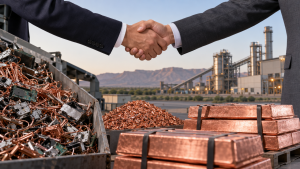
On November 24, 2026, Adani Enterprises announced a significant three-year agreement valued at around $1 billion with Indian recycler Attero. This partnership will provide 2,000 metric tonnes of recycled copper anode each month to Kutch Copper, Adani’s copper smelter located in Mundra, Gujarat. The deal was reportedly finalized about three months prior to its public disclosure.
How Recycled Copper Will Support India’s Smelting Industry
Attero specializes in recovering metals from electronic waste and used batteries, transforming these materials into copper anode for industrial use. This supply arrangement is expected to reduce Kutch Copper’s dependence on imported copper by approximately 5%. Although India has an annual copper refining capacity of nearly 1.3 million tonnes, the country still relies heavily on imported copper concentrates and refined metal to meet demand.
Expanding Production and Recycling Capabilities
Kutch Copper began operations in 2025 with an annual capacity of 500,000 tonnes. Adani plans to double this capacity, aiming to establish the facility as the world’s largest copper smelter at a single location. Meanwhile, Attero announced on November 23, 2026, its intention to invest ₹3,000 crore over five years to expand its e-waste recycling capacity from 225,000 tonnes per year to 1 million tonnes within four years. Additionally, in December 2025, Attero committed about ₹150 crore toward new recycling plants and research and development, including a copper recycling unit in Reengus, Rajasthan.
Key Details About Copper Recycling and Smelting
- E-waste processing techniques: Large-scale electronic waste recycling involves using magnets, eddy currents, and Trommel screens to separate materials like glass, plastics, and both ferrous and non-ferrous metals for further processing.
- Purity levels in copper production: Copper smelters produce anode copper with a purity ranging from 98.5% to 99.8%. This anode copper can then be refined electrochemically to cathode copper with a purity of 99.99%, suitable for industrial applications.
- Types of smelters: Custom smelters process ore on behalf of customers or purchase ore for treatment, whereas integrated smelters operate closely with specific mining operations and are often located near mines.
Why This Partnership Matters for India’s Copper Industry
This deal marks a strategic move toward increasing the use of recycled materials in India’s copper supply chain, which could help reduce the country’s reliance on imports and improve sustainability in metal production. By sourcing copper anode from recycled electronic waste, Adani and Attero are promoting circular economy principles in a sector traditionally dependent on mined resources. The expansion plans for both the smelter and recycling facilities suggest a long-term commitment to scaling up domestic copper production and recycling capacity, potentially positioning India as a stronger player in the global copper market.
Frequently Asked Questions
Q: What is copper anode and why is it important?
A: Copper anode is an intermediate product in copper refining, typically produced by smelting. It is then further purified through electrorefining to create high-purity cathode copper used in electrical wiring and other applications.
Q: How does recycling electronic waste contribute to copper production?
A: Recycling electronic waste recovers valuable metals like copper from discarded devices and batteries, reducing the need for mining and lowering environmental impact while supplying raw material for smelters.
Q: What impact will this deal have on India’s copper imports?
A: The agreement is expected to reduce Kutch Copper’s reliance on imported copper by about 5%, supporting India’s goal of increasing self-sufficiency in copper production.